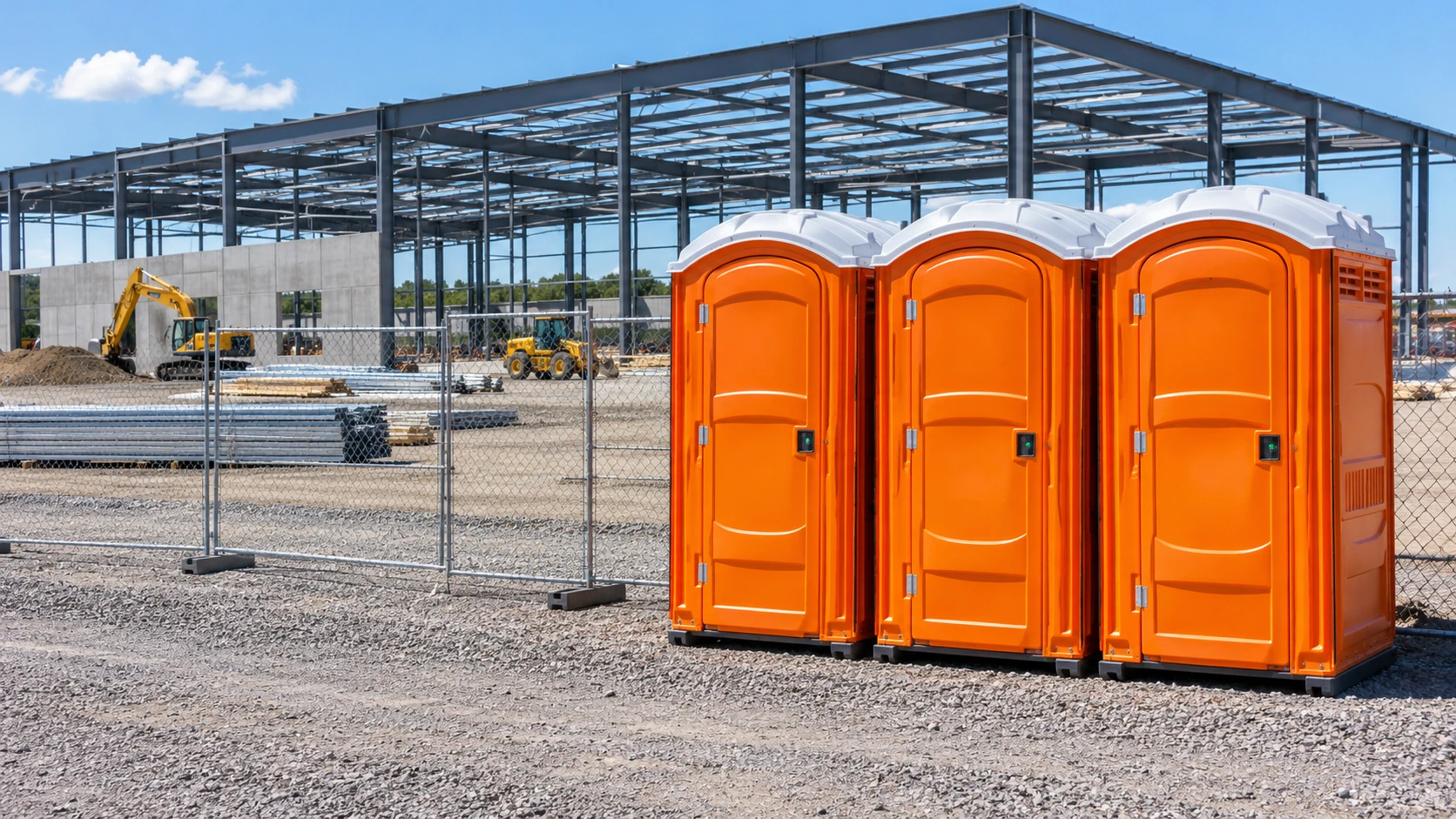
Plan the equipment.
Confirm the operation.
Make access requirements part of procurement
Tell the rental contact who will use the facilities and which access needs must be considered. Ask for the specifications of the actual accessible options offered for the project. A category name does not establish the suitability of every model or installation. The project or property representative should confirm the requirements that apply to the work and the proposed layout.
Assess the complete route
Look beyond the unit position to the path from the working area, parking, or occupied building. Describe gradients, steps, gravel, surface changes, and narrow openings. Explain whether the route is shared with vehicles or crosses an active work zone. Discuss the approach while temporary fencing, stored materials, and other equipment can still be repositioned on the plan.
Reserve enough surrounding space
Confirm the footprint, entry arrangement, door movement, and circulation space for the equipment being offered. Keep those areas available after delivery. An accessible unit can become difficult to use if parked vehicles or a new storage area block its approach. Include the restroom position and its route in the site briefing so workers and other vendors understand the reserved space.
Coordinate washing and additional restroom formats
Discuss hand-washing facilities and how people will move between them and the restroom area. If a trailer is under consideration, review its access features separately using the specific model information. Explain the expected use and the permanent facilities available on site. Compare the overall arrangement rather than assuming one format automatically answers all access and operational needs.
Manage changes during the rental
A staged project can change the usable route as work moves from one area to another. Identify who will monitor access and contact the rental team when the approved layout changes. Ask about relocation before moving equipment. For a longer rental, the service approach and the user route both need to remain practical after the initial setup.
Confirm the rental scope
Give the address, equipment position, start date, expected use, and service-entry instructions. Review the available specifications, delivery arrangements, scheduled servicing, collection, and total pricing. Ask who should review project-specific requirements and when any final placement information is needed. Early coordination gives the team more opportunity to discuss alternatives if the original position cannot be used.