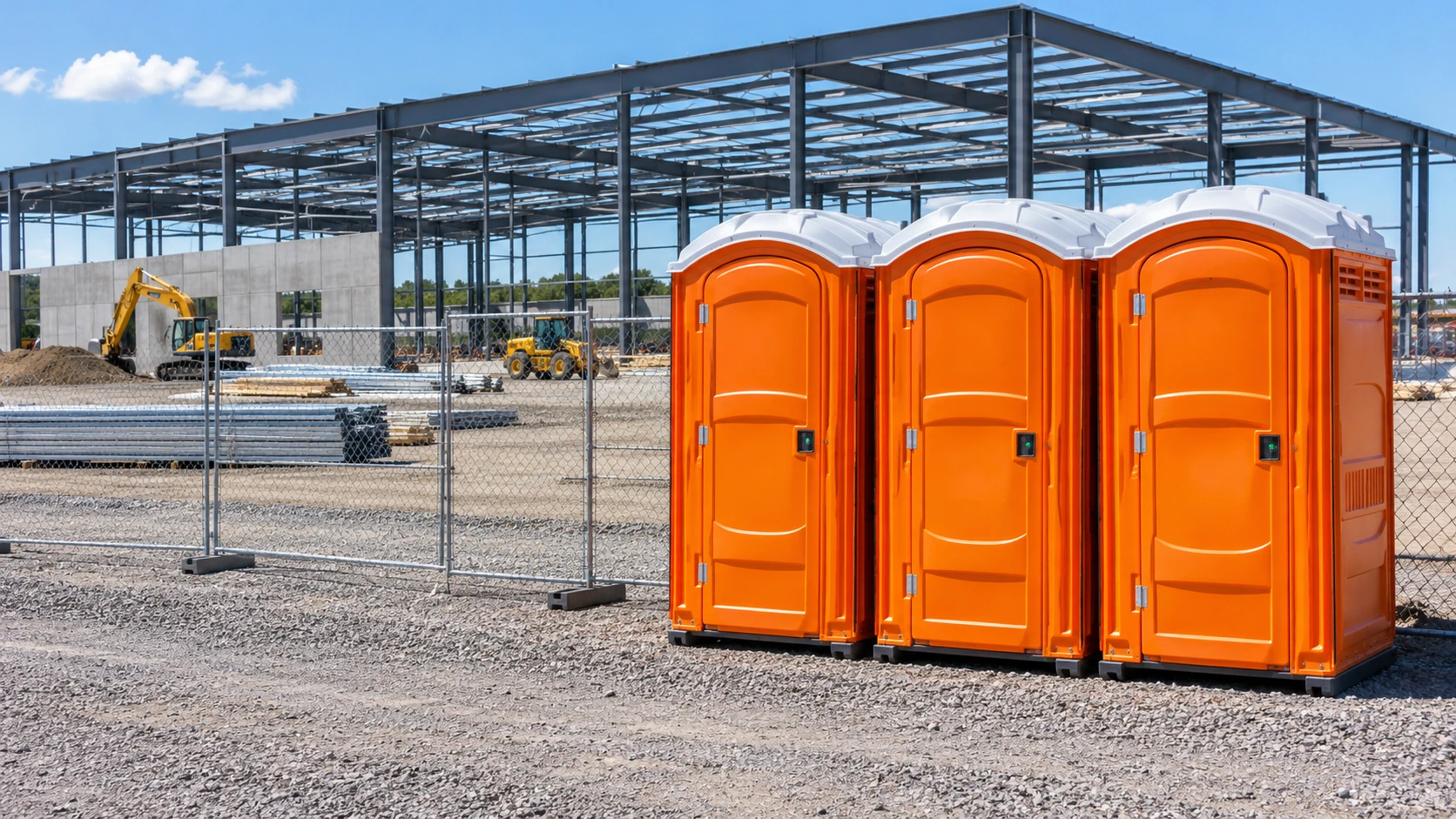
Temporary facilities around an occupied riverfront commercial center
Local geography and the working area
Naperville’s Riverwalk follows the West Branch of the DuPage River and connects a recognizable sequence of paths, bridges, public spaces, and recreation facilities. Downtown’s Water Street area has its own redevelopment context, with the city describing its general boundaries in relation to the river, Main Street, Aurora Avenue, and Webster Street. For commercial restroom planning, these references help locate a project within the city. They do not replace the exact address, the property’s approved entrance, or the pad reserved for equipment. [sources]
Districts, corridors, and site context
Centennial Beach sits toward the western part of the Riverwalk setting, showing how recreation, downtown activity, and working properties occupy the same broader area. A renovation team may operate beside a building that remains open to employees or customers. Explain the separation between the work zone and public circulation, together with loading needs and the location of existing restrooms. Confirm where units can remain without obstructing a route. A nearby public pathway or open lawn is not automatically an approved rental position. [sources]
Planning temporary facilities for this setting
Share the Naperville project’s crew count, use hours, expected duration, and changes between phases. Ask about the offered standard units, accessible options, and washing stations, including their actual dimensions and service requirements. Agree on a firm, level position and the vehicle approach with the site contact. Review cleaning visits, supplies, extensions, delivery windows, collection, and full pricing together. Keep the entrance instructions current as other contractors arrive, and report a changed work area before it affects access to the temporary facilities or their scheduled servicing.
For a working property in Naperville, use our construction restroom guide to prepare crew and schedule details. For organized attendance, the event rental guide covers user numbers, setup windows, and circulation. Both are useful starting points for a call about your particular address.
Keep the plan useful throughout the rental
Once the equipment is placed, keep its service approach available throughout the rental. Explain any planned fencing, changing work zones, or vendor activity that could affect access. For a longer project, ask how supplies and routine visits are handled; for a multi-day occasion, discuss the service window alongside the program.
Before confirming, review the rental period and everything included in the quote: transportation, proposed equipment, scheduled servicing, additional visits if needed, and collection. An approved location and a reliable on-site contact help keep those arrangements clear as the job or event develops.